



updated 2025-10-02
In the 1930’s Roy Rife invented a microscope which enabled everyone to see a living virus. Then, using his microscope, he discovered a cure for cancer. The 3 biggest drug co.s with the help of the head of the AMA, had the money and power to destroy knowledge of both the microscope and the cure. (today, treatment of a single cancer patient averages over $300,000.)
This is only one example of the absolute control that the rich and powerful have over this planet . . . and others(?). When any of us dare to threaten their game of corruption, we are stopped. Clearly domination and control is the “way of life” here, not love and compassion.
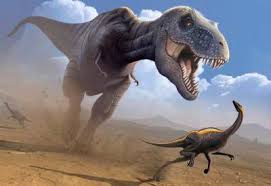
For over 540 million years, there have been animals, birds, fish, killing and eating each other for survival. Now that we are here, we kill and eat for survival also.
From 543 to 490 million years ago “One of the most fearsome hunters in the Cambrian seas was the Anomalocaris”. – www.fossils-facts-and-finds.com/cambrian_period.html
If we came here voluntarily, perhaps it was to prove to ourselves that we do need to put a stop to it, together; that we don’t even want these memories; that the memory of all this violence just holds us back.
“only madness makes a world like this.” . . . “If this were the real world, God would be cruel.” A Course in Miracles, chap.13,p.3 Whoever-whatever did create this world is cruel. It Created “the harshest possible environment” Beyond The Source – Book 1,pg.238 . . . not the one that would foster the most love, but the most violence.
What kind of “madness”, creates a world where so many are forced to kill and eat each other for survival? . . . and who goes around preaching “Love and Peace” to the survivors?! Life is not appreciated or respected. Fear, violence, domination and control has always been the governing reality. Violence and death is the desired, predetermined, premeditated experience.

Who created this kill or be killed, eat or be eaten, survival of the fittest, Law of the Jungle, food chain planet(s)?! Spirits, pseudo-angels, false-Gods? Those who try to tell us to love one another are “preaching to the choir” to the victims. We did not create this kill or be killed planet and we are not the only animals, birds, fish, insects, who wage war, who kill each other, instead of to love one another.
Animals [and insects] don’t just kill for food. They can be very barbaric also.
Baboons have been filmed going to war, with hundreds of monkeys entering into a pitched battle. A fight, filmed by the BBC Natural History Unit, appeared to be triggered by male baboons attempting to steal females from the harems of rivals.
news.bbc.co.uk/earth/hi/earth_news/newsid_8400000/8400019.stm
The larger of the two groups began “systematically invading” the territory of the smaller group. If the invaders found a rival chimp, they would attack it and leave it to die of its wounds. “They annihilated an entire community that way.” … Goodall {primatologist Jane Goodall} was shocked by the brutality of the attacks. She described the invaders “cupping the victim’s head as he lay bleeding with blood pouring from his nose and drinking the blood, twisting a limb, tearing pieces of skin with their teeth…” … These events were even more disturbing because the two groups had been united just a few years before, so the victims “were individuals they had travelled with, fed with, played with, grown up with”.
www.bbc.com/earth/story/20150811-do-animals-fight-wars
Bee colonies in Brisbane are waging war for months on end, sending waves of workers who collide, grapple and die.
The attacking bees eventually won the “numbers game” and overcame the nest completely . . . “They actually started dragging out the workers and youngsters from the hive,” Dr Cunningham said. . . . This type of large-scale insect warfare is well-known in ants, but less so in bees.
“robber bees” in South America, which steal honey and other resources, are particularly known for their ability to wipe out colonies of rival species. Up to 50% of the nests of one common bee species in Brazil are killed by robber bees annually.
www.bbc.com/news/science-environment-29694513
Kill or be Killed
 Given that this planet is based on eat-or-be-eaten barbaric brutality, it can seem almost anticlimactic when corporations buy politicians, when the biggest co’s are as criminal as the mafias, that “Detroit” has gone to court to fight rather than to improve fuel economy, that the oil co’s spend millions lying about their major contribution to global warming . . . and it is an insult for “spirits” and “gods” to blame us rather than admit the truth about this planet.

Angels
Do you believe in angels? Here is one angels reaction:
“Amid all the beauty, however, lurked a dark side: it seemed as if every living creature was killing and feeding off another living creature – a horrific ladder of death”
Confessions of a Rebel Angel by Timothy Wyllie; pg.108
Even the angels are shocked!
Who with the power and lifespan to create entire planets, solar systems(?), a few galaxies(?), and control the evolution of all its life forms is sick enough and sadistic enough, to create all this?
But this almost sounds sadistic:
“What has been created has been foreseen and recognized as a certain direction that could have been taken and in fact has been taken. There is no judgment in this direction” the history of GOD by Guy Needler; pg.429
“No Judgment”. Really! No love, no compassion, no responsibility. This Angel, Spirit, or God is no role model! Most telling is the way it is expressed here, like there is another, option that WAS intended and this is an unwanted alternate, “could have been taken” reality – that has taken over.(?)
No “God” (?) would create this eat-or-be-eaten world and yet no God will lift a finger to put a stop to it either. Sick. “Psycho planet”, as one of Jesus disciples put it:
Jesus knew and told his disciples:
“Now here this” from one of Jesus’ disciples, Didymus Thomas, the Gospel of Thomas:
Father did not make the [world] …
“To say in public and [at] that time that God did not create the world could have been fatal to me. That was then, this is now…
“God did not create duality and he did not create the world. … They completely overlooked the logic that for God to create the imperfect must either mean that He Himself was imperfect or He deliberately made those who were so that they could screw up, be punished by Him, and suffer here on psycho planet. … The Bible begins by telling you “In the beginning God created the heavens and the earth.” He didn’t! …
The Disappearance of the Universe by Gary R. Renard; pages 9, 45, 81-82
“The world you see is an illusion of a world. God did not create it” . . . “only madness makes a world like this.” . . . “If this were the real world, God would be cruel.”
A Course in Miracles by Helen Schucman (C-4.1:1-2:1), (W-pI.152.6:1-7), (T-13.In.2:2-3:1)
“In Genesis 6:6–7 we see the LORD repented that he had made man and decided to destroy the men and animals from the face of the earth.”
Genesis 6:6–7
6 The Lord regretted that he had made human beings on the earth, and his heart was deeply troubled.
7 So the Lord said, “I will wipe from the face of the earth the human race I have created – and with them the animals, the birds and the creatures that move along the ground—for I regret that I have made them.”
And so “god” sends a flood to destroy mankind wnom he created – mass genocide! So, because of god’s mistake for which he repents. he blanes his creations and would kill them all!
This is not the God of the New Testament, not the God Jesus tells us is a God of love.
We are still being given stones
When Jesus talks about the love of a father, we understand.
“…what man is there of you, whom if his son asks for bread, will he give him a stone? . . . If ye then, being evil, know how to give good gifts unto your children, how much more shall your Father which is in heaven give good things to them that ask him?”
Since when does Jesus go around calling people evil, and secondly, he knows this is a violent kill or be killed universe(?!) of domination and control where we are the victims crying out in agony, but instead of stopping the violence, we are given a lecture and told to turn the other cheek, accept another “stone” (we are still starving). In other words, we are told we will NOT get “good things”. Just suffer and die. Not the fatherly type Jesus described.
Jesus repeatedly said “repent for the kingdom of Heaven is at hand”. The “Age of Aquarius” has just arrived. … Some say it is what Jesus was referring to, a thousand years of world peace, … only to be followed by another 500+ million years of “kill or be killed?”
Beyond death, we are going to have to mentally step outside this “multiverse” of universes, find the source of all this negativity, insanity, and violence and replace it all with the universal knowledge of unity, oneness; with the joy of sharing our common experiences of creativity.
the Nag Hammadi Library
In the Nag Hammadi Library, a book of ancient Gnostic writings, Jesus Christ is called ‘Allogenes’, which literally means “Alien”.
Birger A. Pearson writes, “The name ‘Allogenes’ means ‘another race’ or ‘stranger.’ It is a Sethian name, based on an interpretation of ‘another seed’ in Genesis 4:25
http://www.earlychristianwritings.com/allogenes.html
the Annunaki
Edgar Cayce is very clear in saying that Jesus former incarnation was as the Egyptian god Thoth/Hermes, [the son of Enki who was the head of 1 of the 2 Annunaki ruling families on Earth]. Cayce says it was Thoth who built the Great Pyramid and that he, himself, was Ra, the Sun god, and claims he was a priest.
Many Happy Returns; The lives of Edgar Cayce by W.H. Church; pg.79,85
Neal D. Walsch in his book “Conversations with God, book 3” dances around for 3 or more pages to “break the ice” and finally hint that Jesus father was an Annunaki from Nibiru – the God(s) of the Old Testament. [pages 326-328]
Other psychics have also identified Mary Magdalene as the former Egyptian goddess Isis. All being Annunaki from Nibiru the alien race of the 10th planet
“To the Annunaki [inhabitants of our 10th planet, Nibiru], Earth was now their private real estate” [and we were their slaves-pets, whom they created] … although “Their planet’s continual reentry into your system coincides with periods of great upheaval” [mainly the flood of Noah-Atlantis] … and “Under Annunaki rule [Enki, Enlil, Marduk, Isis, Thoth(Jesus), etc.], enforced upon you by their progeny, Earth is about to loose its atmosphere….” just like they are about to deliberately loose their atmosphere also. … “the deliberate heating of the ionosphere, … [is] speeding up the process of atmospheric disintegration.”
Atlantis Rising by Patricia Cori; pg.42,44-46
See below The 12th Planet by Zecharia Sitchin
Still, they did not create this kill-or-be-killed, eat-or-be-eaten planet, which they are helping to destroy. Something bigger is going on here.
“In simple terms, life on Earth is not left to itself and allowed to evolve on its own terms. There is interference and meddling,” Encounter in the Pleiades by P.B. Nichols; pg.85
Sitchin, P.B. Nichols, and others try to document some of “the meddling” (see below). It looks like an experiment of deliberate destructive separation from the beginning. and then, “non-interference” was proclaimed to keep anyone with compassion from upsetting “the apple cart”. It is not just our planet as the authors above and below confirm, it spans other constellations of stars in our galaxy – and maybe beyond but, many authors express the belief that “it is not supposed to be this way.” Really!
Guy Needler’s channel also tells a story of how the creation of this universe and a few other “places” got started. In many ways, his story is similar to many other medium or trance or channeled books-stories which praise some all-knowing all-loving creator, except that he includes a story of how, back near the beginning, his screwed up:
His “All-That-Is” God-creator created 12 great entities out of itself to observe and see what would happen on their own. They were given no contact or communication of any kind, each one in total isolation with no knowledge of the others or even of the “all-that-is” itself. What “All-That-Is” discovered was that having been totally abandoned, forsaken, dumped, discarded, ignored, denied, (!!) each of the 12 in its own time, “either ran riot or extinguished themselves … it drove them quite mad.” . . . “The ‘Twelve Origins’ experiment failed…”
[Needler is not describing a “God-Creator” of love and compassion.]
Beyond the Source, Book 1; by Guy Needler, page 198
Beyond the Source, Book 2; by Guy Needler, pages 62-63, 314-315
He says those conscious suicidal memories-thoughts live on and the reality is that many of those memories-thoughts are in our universe.
Furthermore, we are expected to go from one multi-universe to another, at will:
“migrated from their environment [universe] to another Source Entities environment, [universe] …[is] not only possible but desirable”
the history of GOD by Guy Needler; pg. 77
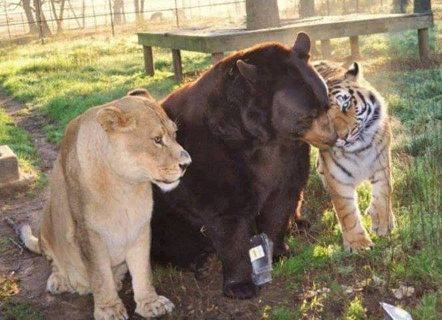
Predators can be friends: lion bear and tiger
What will it take to end this nightmare? Despite all the touchy-feely “love” filled experiences some people claim to have had with spirits, angels, gods, what-have-you, none of those stone-cold “love” filled entities have the compassion to do anything, instead they claim a “non-interference” policy which stands in denial of the reality being experienced. There is interference, hate, anger, violence, death, hunger satisfied only by killing another animal, bird, fish, … everywhere.
Enlightenment is no solution. People who become enlightened, leave. What kind of “enlightenment” is that? The insanity persists.
“Tesla had told me that beings from other planets were already here” . . . “He was very afraid that they had been controlling man for thousands of years and that we were simply test subjects for an experiment of extremely long duration.”
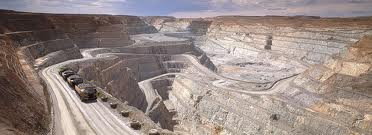 We can ask for a piece of bread but instead of compassion, we are surrounded with predators, in the air, in the water, on the ground, even from other planets. Aliens may want our planets resources, even our reproductive system??
The Nefilim / Anunnaki / Abernache from the planet Nibiru / Marduk,*2 came here about 450,000 years ago and created us to be their slaves in their (African) gold mines.*3
They create us to be their slaves and then in their barbaric fighting, they have used their nuclear and chemical bombs on us, wiping out entire cities of us, and their own planets close calls with this planet has brought us to the brink of destruction. They have tried to or intended to “wipe us out” – total genocide – several times, the last time being “the flood” which destroyed Atlantis and much of the rest of the planet, mentioned in many prehistoric writings as well as the Bible. They created us as their slaves and felt that they had the right to wipe us off the face of the planet. (rather than admit that they were the problem, not us, their slaves)
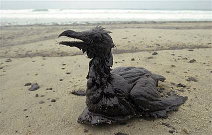
The perception that only one soul (a few?) in billions come back here once they have broken out of this karmic trap is enlightening. That the overwhelming negative forces are maintained, minimizing or completely crushing almost any and all significant attempts to change-improve the situation. The balance of “good and evil” has never changed. Evil, the illusion of Separation, dominates.
“Good” has never been allowed to gain ground, to get the upper hand. Souls still go round and round from one incarnation to the next … even from one planet to the next(?) … going almost nowhere. The Aquarian Age, now upon us is described as an intersession, to lift us forward, not a result of any progress on our part.
Some say it is to make us strong. But, wiser more loving souls say that any defense only invites attack. Just hoping that a predator does not show up attracts his attention. Does it help to be reminded that animals are known to have a “6th sense” and just thinking about them may attract their attention.
There is so much interference, it is bizarre: “For example, [the Pleiadians] believe they were the ones who originally colonized this planet but others will debate that it was done first by the Anunnaki*2 or Orion. [“the Anunnaki planet Nibiru/Marduk [beyond pluto] came from Orion”] … Hitler was told to preserve the Aryan (same as Pleiadian) [race] here on Earth. He was not supposed to kill off the [race] of the Pleiadians arch enemies, the Draco, who colonized Earth in the form of the Semitic race.” …”The Leveron alliance, aka the Draco-Orion empire, consists of reptilians and grays” …  the Pleiadian planet Aldebaran: “Although the Aldebarans are Pleiadians, they align more with the Orion group. … They are the ones who contacted Hitler and sent him off to protect and foster the Aryan race.” – Encounter in the Pleiades by P.B. Nichols, pg.74, 84
“Furthermore, and most importantly we [our military] had been aware of the alien presence on the planet since the 1930’s…
According to Philadelphia Experiment survivor Al Bielek, President Franklin D. Roosevelt met with Pleiadian representatives on board the USS Missouri in the mid-Pacific in 1933. Bielek claimed that this meeting was arranged by Nikola Tesla.
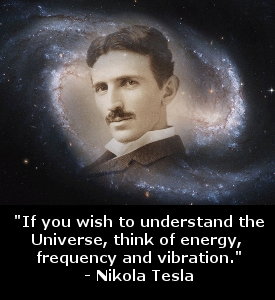
Nikola Tesla
aliens “controlling man for thousands of years”
Forget the SETI people listening for “e.t”, Tesla listened in on “private” alien communications among each other, to and from space, learned to decipher the conversations – and became concerned about it:
Tesla described accidentally discovering alien communications in Collier’s Weekly (March 1901): “Although I could not at the time decipher their meaning, it was impossible for me to think of them as having been entirely accidental. The feeling is constantly growing on me that I had been the first to hear the greeting [conversation] of one planet to another. A purpose was behind these electrical signals” … “This incident was the first of many in which Tesla intercepted what he felt were intelligent signals [conversations] from space.”
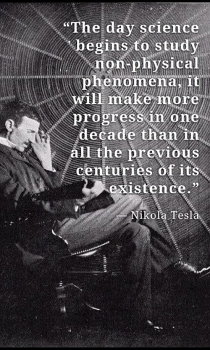 “At the time, it was surmised by prominent scientists that Mars would be a likely haven for intelligent life in our solar system, and Tesla at first thought these signals may be originating from the red planet. He would later change this viewpoint as he became more adept at translating the mysterious signals.”
“In the Tesla journals that he uncovered, Dale Alfrey noted that by the 1920’s Tesla had grown confident that he was able to make sense of the strange radio broadcasts from space. However soon afterwards, Tesla began to express great concerns about beings from other planets who had unsavory designs for planet Earth.”
“The signals are too strong to have traveled the great distances from Mars to Earth,” wrote Tesla. “So I am forced to admit to myself that the sources must come from somewhere in nearby space or even the moon … the creatures that communicate with each other every night are not from Mars, or possibly from any other planet in our solar system.”
“Tesla had told me that beings from other planets were already here,” related Matthews. “He was very afraid that they had been controlling man for thousands of years and that we were simply test subjects for an experiment of extremely long duration.”
“The president who followed President Kennedy [after Lyndon Johnson finished Kennedy’s term] would have been someone else. . . . Mr. Johnson would not have been reelected and we would have had world peace quite a bit sooner.
“And he was eliminated before he was born? . . .
“Yes, And it was all uncreated. It is that simple. That’s why it’s so frightening, what can be done. . . .
“He was influential, yes. You could not look into this man’s eyes and feel anger or hatred. There was no way that anyone could resist signing a peace treaty that would be absolutely binding if this man had arranged it. . . .
“However, that one act was, as they say, the straw that broke the camel’s back, because now the shadow government is the object of scrutiny.
“You’re telling me that we had peace then? This planet was totally . . .
“Yes, and even down to the level of the ordinary citizen. People were happy.
“On this planet. It’s hard to believe. And I can’t convince you, I can only say that that’s the way I see it: that you are living in a variation of reality that you weren’t intended to live in.”[but at every turn we have been denied that peaceful “reality” and this whole planet is still built on violence, and we all still suffer]
Shining The Light, book 1 of 5; pages 48-50; by Light Technology Research
Alien Interview
 The being she interviewed identified itself as an officer, pilot and engineer [named Airl] … from a civilization it refers to as “The Domain”. Their space craft use the planet Venus and the asteroid belt as space ports in our solar system. The Milky Way galaxy is a tiny area within the territorial possessions of “The Domain”. The interview transcripts were kept secret (under threat of her death) by Nurse MacElroy for 60 years, and released a few months before her passing at the age of 83.
Mrs. Matilda O’Donnell MacElroy, Senior Master Sergeant, Women’s Army Air Force Medical Corp, Retired
… You, and every IS-BE on Earth, have participated in the creation of this universe. Even though you are now confined to a fragile body made of flesh; and you [may] live for only 65 short rotations of your planet around a star;” … “You, and every IS-BE on Earth, have participated in the creation of this universe. … you are who you are and will always be.”
“Most of the IS-BEs on Earth are good, honest, able beings: artists, managers, geniuses, free thinkers and revolutionaries who have harmed no one, really. They are no threat to anyone except the criminals who have imprisoned them.”
The difference between an IS-BE like Airl and most of the IS-BEs inhabiting bodies on Earth, is that Airl can enter and depart from her “doll” at will. She can perceive at selective depths through matter. Airl and other officers of The Domain can communicate telepathically. Since an IS-BE is not a physical universe entity it has no location in space or time. An IS-BE is literally, “immaterial”.
They can span great distances of space instantly.
They can experience sensations, more intensely than a biological body, without the use of physical sensory mechanisms. An IS-BE can exclude pain from their perception. Airl can also remember her “identity”, so to speak, all the way back into the dim mists of time, for trillions of years!
“Our communication did not consist of spoken language, in the conventional sense. Indeed, the body of THE ALIEN HAD NO MOUTH through which to speak. [OR EAT] Our communication was by telepathy.” -pg.25
Airl: “all sentient beings are immortal spiritual beings. This includes human beings. For the sake of accuracy and simplicity I will use a made-up word: “IS-BE”. Because the primary nature of an immortal being is that they live in a timeless state of “is”, and the only reason for their existence is that they decide to “be”.
No matter how lowly their station in a society, every IS-BE deserves the respect and treatment that I myself would like to receive from others. Each person on Earth continues to be an IS-BE whether they are aware of the fact or not.”
Airl said that she sensed that I was confused about the idea. She said she would demonstrate to me that I AM ALSO AN IMMORTAL SPIRITUAL BEING. She said, “Be above your body!” Immediately, I realized that I was “outside” of my body, looking down from the ceiling at the top of my body’s head! I was also able to see the room around me, including Airl’s body sitting in the chair next to my own body. After a moment, I realized the simple, but shocking, reality, that “I” am not a body. pg.50
In that moment a black veil lifted and for the first time in my life, and for a very long time into the past, I realized that I am not [just] “my soul”, but that “I” am “me” — a spiritual being. This was an unexplainable epiphany, but one that fills me with a joy and relief I cannot recall having experienced ever before. As for the “immortal” part, I do not understand her meaning, as I have always been taught that I am not immortal — a spirit, perhaps — but certainly not immortal! [having alredy lived for over a trillion years sounds quite “immortal”]
After a moment — I’m not sure how long — Airl asked me if I had a better understanding of the idea. Suddenly, I was back inside my body again, and said out loud, “Yes! I see what you mean!” pg.51
“ANIMALS DID NOT EAT OTHER ANIMALS FOR FOOD”,
“but consumed sunlight, minerals or vegetable matter only.” …page 113
… “certain members of the Council were strategically BRIBED OR MURDERED, to author an agreement which resulted in …the food chain”. … [this kill or be killed, eat or be eaten, survival of the fittest food chain!]
page 112
Now, because of all the killing for survival [“what is wrong with this universe?”] “the invention of sexual reproduction was the solution to the problem of having to continually manufacture replacements” …
page 112
“The core concept behind ‘sexual reproduction’ technology was the invention of a chemical/electronic interaction called ‘cyclical stimulus-response generators’. … This is a programmed genetic mechanism which causes a seemingly spontaneous, recurring impulse to reproduce.”
“Another important mechanism used in the reproductive process, especially with Homo Sapiens type bodies, is the implantation of a ‘chemical-electrical trigger’ mechanism in the body. The ‘trigger’ which attracts IS-BEs to inhabit a human body, or any kind of “flesh body”, is the use of an artificially imprinted electronic wave which uses “aesthetic pain” to attract the IS-BE.
page 114
Every trap in the universe, including those used to capture IS-BEs who remain free, is “baited” with an aesthetic electronic wave. The sensations caused by the aesthetic wavelength are more attractive to an IS-BE than any other sensation. When the electronic waves of pain and beauty are combined together, this causes the IS-BE to get “stuck” in the body.
page 115
“The debilitating impact and addiction to the “sexual aesthetic-pain” electronic wave is the reason that the ruling class of The Domain do not inhabit flesh bodies. This is also why officers of The Domain Forces only use doll bodies.
“The Domain discovered that a wide area of space is monitored by an “electronic force field” which controls all of the IS-BE’s [sentient beings] in this end of the galaxy, including Earth. The electronic force screen is designed to detect IS-BEs and prevent them from leaving the area. … [when bodies of the IS-BE’s] die they depart from the body. They are detected by the “force screen”, they are captured and “ordered” by hypnotic command to “RETURN TO THE LIGHT”. The idea of “heaven” [replaced with a “FAKE NEWS” “False Flag”, substitute trick] and the “afterlife” are part of the hypnotic suggestion. … The result is that the captured IS-BE is subjected to a very severe “brainwashing” treatment which erases the memory of the IS-BE. [before re-incarnating]” – Airl pg.61-62
“Please accept this material and make it known to as many people as possible. I repeat that it is not my intention to endanger your life with the possession of this material… [US military threats] However, I do sense that you can appreciate the value that such knowledge may have to those who are willing and able to face the reality of it.
It is vital that people understand the devastating consequences to our spiritual and physical survival if we fail to take effective action to undo the long-standing and pervasive effects of alien intervention on Earth.” – MacElroy pg.25-26
see https://www.bibliotecapleyades.net/vida_alien/alieninterview/alieninterview.htm#Table%20Of%20Contents
“We are viewed as a violent warring species – a danger to all who dare to approach us.” – book: Transition Now, part 2 – by Patricia Cori
In Brad Olsen’s 2013 book Future Esoteric he relates information that our failure to remember our lives outside our bodies and past lives we have had in other bodies is due to an electronic force field.
Patricia Cori in her book, “Atlantis Rising” (pages 36-37, 48) tells how the Annunaki rewired our DNA, disabling [removing] ten of our twelve DNA strands and put up a “grid”, “an immense force field”, … scrambled-suppressed our memories with an electromagnetic field so that we “would remain earth-bound and isolated, for as long as they could sufficiently contain you in their nets.”
“Tesla had told me that beings from other planets were already here,” related Matthews. “He was very afraid that they had been controlling man for thousands of years and that we were simply test subjects for an experiment of extremely long duration.”
We Are Tricked Into Blaming Ourselves
We are not the cause of this planet’s destruction. We are not even aware of all their destruction that has gone on and still goes on today. What little we are involved in, we are pawns in their plan to take all of this planet’s gold and silver and anything else they want. And according to what has been written, just as they have controlled us, they are being manipulated-controlled also and have been for as many millenia as they have existed and probably others before them. They are not masters of their domains either. Whatever is going on here, we are expected to fail over and over. Do we ask “why is it enforced that fear and domination stays in control?” or do we avoid “the blame game” and just do something about it.
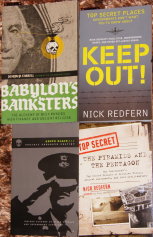 We are not alone, no matter how hard those with the money and power try to hide it. Roswell and other reports have been enough to prove it to all but those who cannot handle it. If they are here now, they have always been here. Chariots of the Gods, by Erich von Daniken reminds us of so many instances including Bibical passages, Egyptian temple paintings, an airport in Peru, that all make it obvious that aliens have been here – as if we had not already realized it, but it still does not explain why they came and kept coming… Sitchin finally explains that for the Gods from our 10th (“12th”) planet anyway: It is/was the gold.
We are pawns in this twisted game and we have been trying, inventing things that were and are of great benefit to us all – our entire planet – and some of us have been killed for it. [Tesla included] If a person speaks out against the corruption and violence, they may be killed for it. High praise for those who have tried to improve life on this planet – both those who have survived and the dead.
Chariots of the Gods,
by Erich von Daniken
Born on April 14th, 1935, in Zofingen, Switzerland, Erich von Daniken was educated at the College St-Michel in Fribourg, where already as a student he occupied his time with the study of the ancient holy writings. While managing director of a Swiss 5-Star Hotel, he wrote his first book, Chariots of the Gods,(1968) which was an immediate bestseller in the United States, Germany, and later in 38 other countries.
Erich von Daniken’s books have been translated into 32 languages, and have sold 65 million copies worldwide. From his books two full-length documentary films have been produced: Chariots of the Gods and Messages of the Gods. Of the more than 3,000 lectures which Erich von Daniken has given in 25 countries, over 500 were presented at universities. Fluent in four languages, Erich von Daniken is an avid researcher and a compulsive traveller, averaging 100,000 miles each year to remote spots of the Earth. This enables him to closely examine the phenomena about which he writes.
Erich von Daniken is a member of the Swiss writers association, the German writers association, and the International PEN-Club. He was awarded with an Honorary Doctorate degree by the “La Universidad Boliviana”
“Erich von Daniken’s Chariots of the Gods is a work of monumental importance – the first book to introduce the shocking theory that ancient Earth had been visited by aliens. This world-famous bestseller has withstood the test of time, inspiring countless books and films.
The 12th Planet
by Zecharia Sitchin
Zecharia Sitchin (1920-2010) was one of the few scholars able to read and interpret ancient Sumerian and Akkadian clay tablets. He has combined those ancient texts, archeology, and the Bible with the latest scientific discoveries to reveal the history and prehistory of mankind and planet Earth as our ancient civilizations recorded it, offering evidence that we are not alone in our own solar system. Sitchin compiled the complete story of the Anunnaki’s impact on human civilization from fragments scattered throughout Sumerian, Akkadian, Babylonian, Assyrian, Hittite, Egyptian, Canaanite, and Hebrew sources. His trailblazing books have been translated into more than 20 languages. He is a graduate of the University of London and had been a journalist and editor in Israel for many years.

As Sitchin explains, the early homo sapin cultures learned that there were 12 heavenly bodies, 10 planets [the 10th planet = Nibiru, a.k.a. Marduk] and the Sun and the Moon. To them, the 12th heavenly body was Nibiru the most important one to their/our Gods. It was their and our God’s home planet, [the 10th planet] beyond Pluto, the 9th planet.
Our God(s), The barbarian Anunnaki fought among themselves almost to the point of self annihilation [there were many more women than men left alive when they finally agreed to a truce], then fought among themselves again here on our planet, killed us (whom they created to be their slaves) with their nuclear weapons, taught us to start wars and kill each other on their command, demanded that we worship them and give them all the gold they forced us to dig out for them in their mines, and when their own men, our Gods started having sex with us, their female slaves, homo sapins, (rape?) their ruler, Enlil, declared that we were all to be killed, as if it was our fault. Sick!
However, discovering that the approach of their planet (Nibiru) was about to cause a large piece of the South Polar ice cap to break off and crash into the ocean and flood the entire planet, their ruler, Enlil, ordered all his “Gods” to keep their knowledge from their Homo Sapin slaves, which he wanted annihilated, and let the flood do his dirty work for him
while they escaped at the last minute by flying up to their orbiting space station(s) above the Earth and watch us all drown. Oh, yes, and when he found that one of his Gods, Enki, had ratted on him and told one family of slaves [Noah] to build a boat (to exact specifications) and therefore survived, he made sure it got written into our tablets that the flood was our fault! We had been bad. (even today some cultures blame a woman for being forcibly raped.) Who are the sick barbarians here?! . . . (Any more sick than building entire planet(s) on an eat or be eaten “food chain”?)
African Temples of the Anunnaki
by Michael Tellinger

“stone axes from these stone ruins have been dated to be between 200,000 and 400,000 years old. … they unearthed some 300,000 artifacts and charred animal bones, many of creatures long extinct. – pg.140
“With more than 250 original full-color photographs, Michael Tellinger documents thousands of circular stone ruins, monoliths, ancient roads, agricultural terraces, and prehistoric mines in South Africa. He reveals how these 200,000-year-old sites perfectly match Sumerian descriptions of Abzu, the land of the First People – including the vast gold-mining operations of the Anunnaki from the 12th planet, Nibiru, and the city of Anunnaki leader Enki. –
https://www.amazon.com/African-Temples-Anunnaki-Technologies-Mines/dp/1591431506
“Mapping thousands of square miles of continuous settlements and three urban centers–each one larger than modern-day Los Angeles–Tellinger provides the PHYSICAL PROOF OF ZECHARIA SITCHIN’S THEORIES on the Anunnaki origins of humanity.
https://www.amazon.com/African-Temples-Anunnaki-Technologies-Mines/dp/1591431506
Adam’s Calendar was built by Enki even before the Homo-sapin (Sumerian and African) slaves were created. It includes 3 stones pointing to the 3 stars of Orion’s belt. It is in-line with his fortress, Great Zimbabwe, and with the Great Pyramid of Giza, when it was built many thousands of years later, (all on the same longitude: 31 degrees east) – pg.62-63
BUILDING
The Great Zimbabwe monument is built out of granite which is the parent rock of the region – i.e. it predominates locally. The building method used was dry-stone walling, demanding a high level of masonry expertise. Some of the site is built round natural rock formations. The actual structure comprises a huge enclosing wall some 20 meters high.
Inside there are concentric passageways, along with a number of enclosures. One of these is thought to be a royal enclosure. Large quantities of gold and ceremonial battle axes, along with other objects have been found there.
There is also what is thought to be a gold workshop, and a shrine which is still regarded as sacred today.
WEALTH
The wealth of Great Zimbabwe lay in cattle production and gold. There are a number of mines to the west of Great Zimbabwe, about 40 kilometres away. One theory is that the rulers of Great Zimbabwe did not have direct control over the gold mines, but rather managed the trade in it, buying up huge quantities in exchange for cattle.
The evidence suggests that Great Zimbabwe was at the center of an international commercial system, which on the continent of Africa, encompassed settlements on the East African Coast such as Kilwa, Malindi and Mogadishu. But this trade network also extended to towns in the Gulf, in western parts of India, and even went as far as China.
http://www.bbc.co.uk/worldservice/africa/features/storyofafrica/10chapter1.shtml
… your writeup is great shot into the facts and fiction doing around. … Perhaps such is the greatest life’s existence and think /act benevolently towards all Hue-Manities. Love you all Guys …!!